&geometry(132x120) "Lithgow Veterinary Hospital")


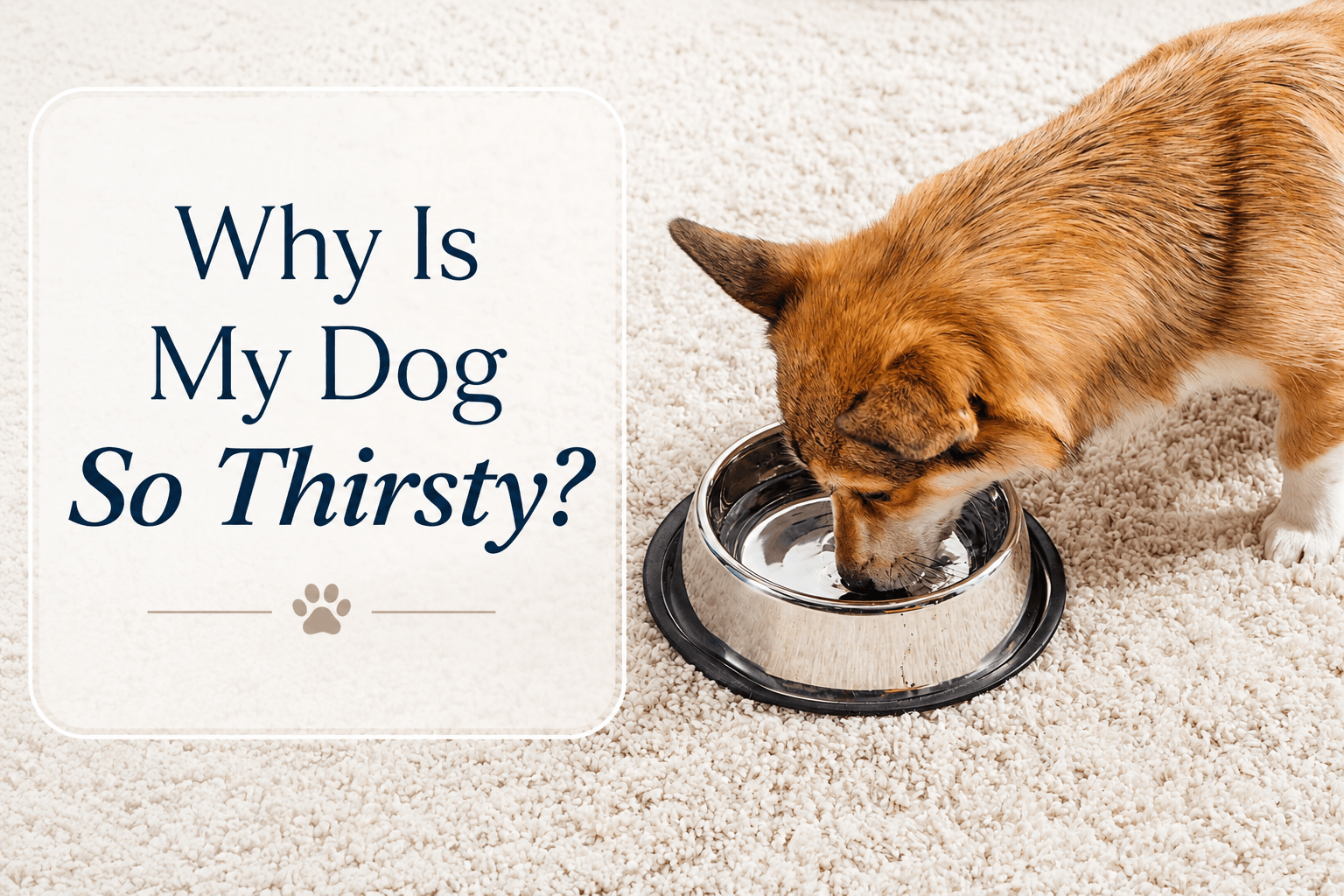
Why Is My Dog So Thirsty?
 "Why Is My Dog So Thirsty?")
Are you refilling your dog's water bowl far more often than you used to? Perhaps they seem to spend longer drinking, are constantly looking for water, or suddenly need extra toilet breaks throughout the day or overnight.
Dogs do not drink exactly the same amount every day. Exercise, temperature and diet can all influence how thirsty they feel. What matters more is recognising when your dog's drinking habits have changed significantly from what is normal for them.
Excessive thirst is known medically as polydipsia. It frequently occurs alongside polyuria, the term veterinarians use for increased urine production.
An occasional thirsty day is usually nothing to be alarmed about. Persistent changes, however, are worth investigating.
How much water should a dog normally drink?
Water requirements vary considerably between individual dogs.
Many healthy dogs drink approximately 40-60 mL of water for every kilogram of body weight in a 24-hour period. However, this is only a general guide. Weather conditions, activity, food, age and health can all influence how much water an individual dog needs.
For a dog weighing 10 kg, this may work out to approximately 400-600 mL a day.
Temporary increases can be completely normal. A warmer New South Wales day, spending more time running or walking, moving from canned food to dry biscuits, pregnancy or nursing a litter can all make a dog thirstier.
For most owners, the more useful thing to ask is:
Has my dog's water intake changed significantly compared with what is normal for them?
Knowing your dog's everyday routine makes it easier to spot these subtle changes early.
Why would a dog suddenly start drinking more?
Not every increase in drinking is caused by illness.
Some everyday explanations include:
a longer or more strenuous walk
warmer temperatures
eating more dry food
fluid loss following diarrhoea or vomiting
consuming an unusually salty food
taking certain medications.
If your dog remains unusually thirsty despite there being no obvious explanation, your veterinarian may need to look for a medical cause.
Kidney disease
One of the kidneys' many jobs is helping the body conserve water by controlling how concentrated the urine becomes.
When they are not functioning normally, more water may be lost in the urine. The dog then drinks more frequently in an attempt to replace that lost fluid.
This can mean increased urination and thirst become noticeable before some of the other signs of kidney disease appear.
Diabetes
When a dog has diabetes mellitus, glucose builds up in their bloodstream.
The body tries to eliminate some of that glucose through the urine. Water follows with it, leading to larger amounts of urine being produced.
Dogs therefore often compensate by drinking considerably more. Owners may also notice changes in their pet's weight or appetite
Cushing's disease
Dogs affected by Cushing's disease produce or are exposed to excessive levels of cortisol.
A persistent increase in both drinking and urination is commonly seen. Other possible changes include a larger appetite, more frequent panting, coat thinning, skin problems and enlargement of the abdomen.
Liver disease or infection
A number of illnesses can disturb normal fluid regulation, including certain liver disorders, infections and conditions that cause fever.
Another important consideration for female dogs that have not been desexed is pyometra, an infection of the uterus.
Pyometra can become life-threatening and requires urgent veterinary care.
Medication
Has your dog's thirst increased since starting medication?
Some treatments, including corticosteroids and certain diuretics, can cause dogs to both drink and urinate more.
Mention any change to your veterinarian, but continue giving prescribed medication unless they advise you to stop or alter the dose.
What other changes should I look for?
The reason behind your dog's increased thirst can sometimes become clearer when you look at what else has changed.
Pay attention to whether your dog is also:
asking to urinate much more frequently
having unexpected accidents indoors
waking you to go outside overnight
eating more or less than normal
gaining or losing weight without an obvious reason
vomiting or experiencing diarrhoea
becoming tired or less interested in normal activities
panting more frequently
developing coat or skin changes
developing a larger-looking abdomen
producing urine that looks or smells different.
A combination of increased drinking and other unexplained changes is a good reason to organise a veterinary examination.
Try this simple 24-hour water check
It is easy to underestimate how much water a dog is actually consuming.
If you suspect your dog's intake has increased, try monitoring it over one full day.
Start by measuring the water placed into their bowl.
Record any extra water you add throughout the day.
After 24 hours, measure how much water is still there.
Use those amounts to estimate how much your dog drank.
Try to prevent or account for drinking from other sources during the measurement period.
For households with several pets sharing the same bowl, it may not be possible to get an exact figure, but even general observations can still be useful.
Write the amount down and share it with your veterinarian when you visit.
One thing you should never do
Never take your dog's water away in an attempt to stop excessive drinking.
When increased thirst is caused by a medical problem, the body may already be losing too much fluid. Preventing your dog from replacing it can quickly lead to dehydration and may worsen their condition.
Keep clean, fresh water freely available unless you have specifically been instructed otherwise by your veterinarian
What will the vet check?
There is no single test that explains every case of increased thirst.
Your veterinarian will usually start by gathering information about when you first noticed the change and whether your dog's urination, appetite, body weight, food, medication or general behaviour has also changed.
A physical examination can help determine what testing is appropriate.
Blood and urine tests are commonly recommended because they can provide useful information about kidney and liver health, blood glucose levels, urine concentration, infection, electrolytes and certain hormonal problems.
Our team can investigate unusual changes in your dog's drinking habits and advise you on any testing or treatment they may require.
When should I take my dog to the vet for excessive drinking?
If your dog continues to drink substantially more water than is normal for them, especially without an obvious explanation, it is sensible to arrange a veterinary appointment.
Changes involving urination, appetite, body weight or energy levels make an examination even more important.
Seek veterinary care more urgently if your dog's excessive thirst occurs together with vomiting, diarrhoea, severe weakness, collapse, disorientation, loss of appetite, heat stress, suspected poisoning or difficulty urinating.
An increase in water intake does not automatically mean your dog is unwell. However, because thirst can sometimes be one of the first outward signs of a health problem, a persistent change is worth checking.
If your dog has become noticeably thirstier or is urinating more frequently, contact us to arrange a veterinary examination.
| Tags:DogHealth Advice |