&geometry(132x120) "Lithgow Veterinary Hospital")


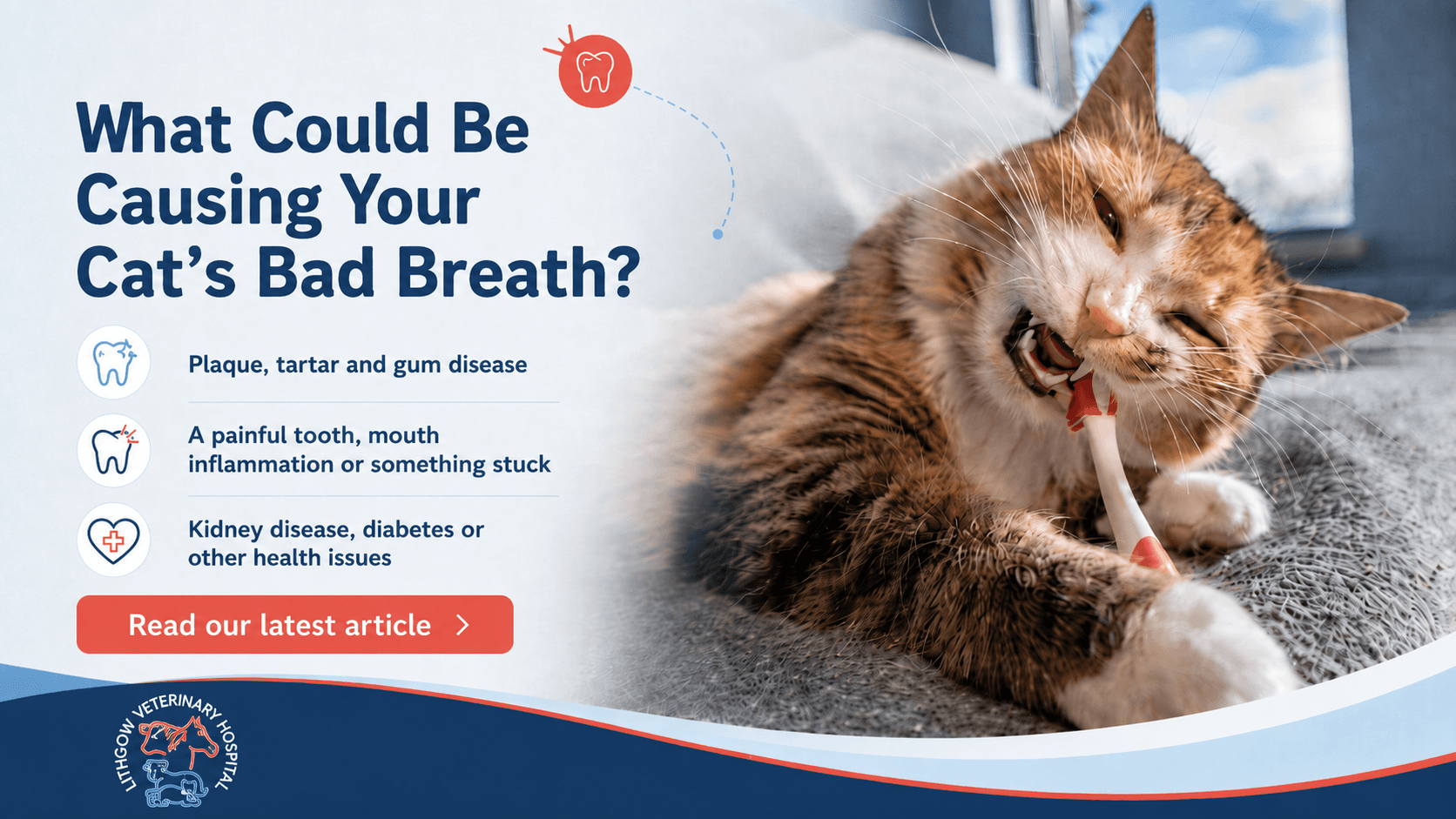
What Could Be Causing Your Cat’s Bad Breath?
 "What Could Be Causing Your Cat’s Bad Breath?")
Your cat jumps onto your lap, settles in for a cuddle and leans towards your face. Then you notice it: an unpleasant smell coming from their mouth.
It is easy to blame the latest bowl of fishy food. Sometimes, that is all it is. But when the smell keeps returning, gets worse, or seems different from usual, your cat may be giving you an important clue about their health.
Bad breath can begin with something as common as plaque on the teeth. It can also occur when a tooth is painful, the gums are inflamed, or another medical condition is affecting your cat.
At Lithgow Veterinary Hospital, we know cats do not always make it obvious when they are uncomfortable. Paying attention to small changes at home can help dental and health problems be recognised earlier.
Is It Just Their Dinner?
Your cat’s breath is unlikely to smell completely fresh after eating wet food, fish or another strong-smelling meal. A mild odour that disappears soon afterwards is generally less concerning.
What deserves attention is breath that:
- Remains unpleasant throughout the day
- Returns regardless of what your cat eats
- Gradually becomes stronger
- Suddenly changes in smell
- Occurs with changes in eating or behaviour
Persistent bad breath is known as halitosis. Rather than being a condition on its own, it is usually a sign that something else is happening.
In most cases, the first place to investigate is your cat’s mouth.
How Dental Problems Begin
Dental disease often develops quietly.
A thin layer of plaque forms on the teeth as bacteria mix with saliva and tiny food particles. Unless that plaque is removed, it begins to harden into yellow or brown tartar.
Tartar can build up around the gumline, creating an environment where more bacteria collect. The gums may then become red, swollen, and painful.
As the disease progresses, infection and inflammation can move beneath the gums and damage the tissues surrounding the teeth. Teeth may become loose or develop painful disease that cannot be seen simply by looking at the crowns.
The odour produced by bacteria and unhealthy tissue is often what owners recognise as bad breath.
Cats May Hide Mouth Pain
A cat with a sore mouth will not necessarily stop eating straight away.
Cats instinctively hide pain and weakness. Instead of crying or refusing every meal, they may make small adjustments to avoid discomfort.
Perhaps they begin chewing on one side. They may swallow food without chewing properly, leave hard biscuits behind, or wait at the bowl as though they are hungry but unsure about eating.
Other signs may include:
- Eating more slowly than usual
- Dropping food from the mouth
- Preferring wet or softer food
- Turning the head while chewing
- Pawing at the face
- Rubbing the mouth against furniture
- Drooling
- Blood around the lips or in the saliva
- Grooming less frequently
- Becoming less active or affectionate
- Losing weight
These signs are not always dramatic. Sometimes a cat with dental pain simply seems a little quieter or fussier than normal.
Other Painful Conditions Inside the Mouth
Plaque and gum disease are not the only dental concerns that can affect cats.
Tooth resorption
- Tooth resorption is a painful condition in which the structure of a tooth begins to break down.
- The visible part of the tooth may look damaged, pink, or partially covered by gum tissue. In other cases, the problem is hidden below the gumline and cannot be confirmed without a detailed dental assessment.
Fractured or infected teeth
- A tooth may become damaged through trauma or disease. Bacteria can reach the sensitive tissue inside the tooth and lead to pain or infection.
- A cat with an infected tooth may develop local swelling, bad breath, drooling, or reluctance to chew.
Gingivostomatitis
- Some cats develop widespread and severe inflammation across the gums and other tissues inside the mouth.
- This condition, called gingivostomatitis, can make eating and swallowing extremely painful. Cats may drool heavily, lose weight, develop strong-smelling breath, or approach food and then retreat because they expect it to hurt.
Ulcers and abnormal growths
- Ulcers, wounds and abnormal tissue growth can also cause bad breath.
Contact your veterinarian if you notice swelling, bleeding, difficulty swallowing, sores inside the mouth or an unexplained change in your cat’s facial appearance.
Has Something Become Trapped?
Cats are curious, and small objects can occasionally become caught between their teeth or beneath the tongue.
Grass, food, hair, bone fragments, string and thread can irritate the mouth. Once trapped material starts to break down, it may produce a strong smell.
Your cat might suddenly begin drooling, gagging, pawing at the mouth or refusing food.
Do not pull on string or thread that is hanging from your cat’s mouth. The other end may be caught beneath the tongue or extend further into the digestive tract.
Call Lithgow Veterinary Hospital for guidance rather than trying to remove it yourself.
Can Bad Breath Come From Another Illness?
Yes. Dental disease is a common cause, but not every case of halitosis begins in the mouth.
The type of smell and any additional symptoms can provide useful information.
A urine-like or ammonia smell
- Kidney disease can sometimes cause a cat’s breath to smell chemical, metallic or ammonia-like. You may also notice that your cat is drinking more, urinating more frequently, vomiting, eating less or losing weight.
A sweet or fruity smell
- An unusually sweet, fruity or chemical smell may be associated with diabetes or a serious complication of diabetes. Possible accompanying signs include increased thirst, increased urination, weight loss and a change in appetite.
A very foul or rotten smell
A strong rotten odour may occur with advanced dental disease, infected tissue, severe inflammation, ulcers or an abnormal growth. Because different conditions can create similar smells, the cause cannot be diagnosed by breath alone. A veterinary examination is needed.
When Is a Veterinary Appointment Needed?
Arrange a check-up when bad breath persists or occurs with any change in your cat’s usual habits.
It is particularly important to seek advice if your cat:
- Struggles to chew or swallow
- Stops eating or eats much less
- Drools excessively
- Has blood coming from the mouth
- Develops swelling around the jaw or face
- Loses weight without explanation
- Drinks or urinates more than usual
- Vomits repeatedly
- Appears withdrawn, distressed or unusually quiet
A sudden loss of appetite should always be taken seriously. Contact your veterinarian promptly rather than waiting several days to see whether it resolves.
Finding the Source of the Smell
During an initial consultation, your veterinarian will examine as much of your cat’s mouth as possible while they are awake.
They will look for tartar, red gums, damaged or loose teeth, swelling, ulcers, trapped objects and other visible abnormalities.
However, a conscious cat is unlikely to allow every tooth and area beneath the gums to be examined thoroughly. A complete dental assessment and professional clean therefore need to be performed under general anaesthetic.
Once your cat is safely anaesthetised, the veterinary team can chart the teeth and evaluate the amount of tartar, gum inflammation and any pockets around the teeth.
Plaque and tartar can then be removed from above and below the gumline using specialised dental equipment. The teeth are polished afterwards, and any teeth that are too badly damaged to save may need to be extracted.
If your veterinarian suspects that the smell is related to kidney disease, diabetes or another medical condition, they may recommend blood tests, urine tests or further investigation.
Why Breath-Freshening Products Are Not Enough
Pet dental treats, gels, water additives and specialised foods can have a place in preventive care.
They should not, however, be used as a substitute for an examination when your cat already has persistent bad breath.
These products cannot remove deep infection, repair damaged tooth roots or relieve pain from an unhealthy tooth. Attempting to mask the odour may delay treatment while the underlying condition continues to progress.
The first step is finding out what is causing the smell.
Caring for Your Cat’s Teeth at Home
After any existing dental disease has been treated, home care can help slow the return of plaque and tartar.
Toothbrushing
Regular brushing is one of the most effective ways to remove plaque before it hardens.
Use a pet toothbrush and toothpaste created specifically for cats. Human toothpaste should never be used because it is not designed to be swallowed by animals.
Introduce brushing gradually and avoid forcing your cat. You might begin by allowing them to lick pet toothpaste from your finger before gently touching the outside of the teeth.
A few calm seconds is a good starting point.
If your cat already has red gums, bad breath or signs of pain, have their mouth examined before attempting to brush.
Dental diets and treats
Some veterinary dental diets and approved treats are designed to help limit plaque or tartar. Your veterinary team can help you select an option suited to your cat’s needs.
Remember that products vary. A treat being hard or crunchy does not automatically mean it will clean the teeth effectively.
Regular veterinary checks
Routine health examinations provide an opportunity to assess your cat’s mouth and identify changes that may not yet be causing obvious symptoms.
Older cats and cats that have previously needed dental treatment may require closer monitoring.
Do Not Ignore the Message Behind the Smell
Your cat’s bad breath may seem like a minor inconvenience, but it can be their way of communicating that something is uncomfortable.
For many cats, treatment begins with addressing plaque, gum inflammation or a painful tooth. For others, the smell may lead to the diagnosis of another health condition.
Recognising the change and arranging an examination can help your cat receive relief before the problem becomes more advanced.
If your cat’s breath has become persistently unpleasant or you have noticed changes in their appetite, grooming, weight or behaviour, contact us to arrange a dental and health assessment.
| Tags:CatPet Dental Health |