&geometry(132x120) "Lithgow Veterinary Hospital")


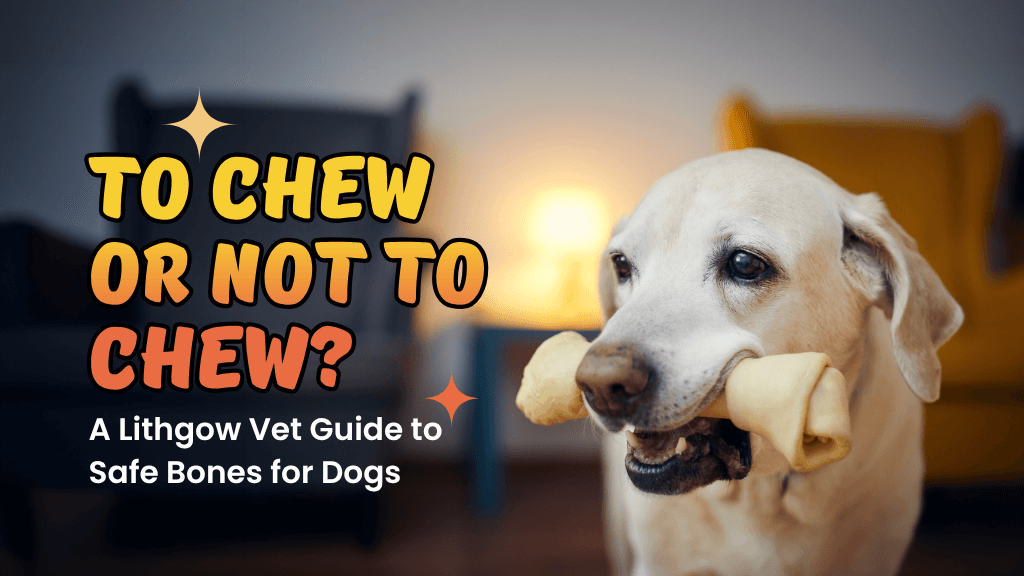
To Chew or Not to Chew? A Lithgow Vet Guide to Safe Bones for Dogs
 "To Chew or Not to Chew? A Lithgow Vet Guide to Safe Bones for Dogs")
There’s something timeless about seeing a dog happily chewing on a bone. For many pet owners in Lithgow, offering a bone feels like a natural and rewarding treat for their dog. Bones can help relieve boredom, provide mental enrichment, and even support dental health by reducing plaque build-up.
At Lithgow Vet, however, we also see the unfortunate complications that can happen when bones are not chosen or given safely. From broken teeth to digestive blockages and internal injuries, bones can sometimes cause serious emergencies. So, are bones safe for dogs? The answer comes down to the type of bone, your dog’s chewing habits, and proper supervision.
The Most Important Rule: Never Feed Cooked Bones
Cooked bones are one of the most dangerous treats you can offer your dog, regardless of whether they have been roasted, boiled, smoked, or fried.
- Why Cooking Changes the Bone:
- When bones are cooked, they lose moisture and collagen, becoming dry and brittle.
- The Splintering Danger:
- Unlike raw bones, cooked bones can easily snap into sharp fragments that may injure your dog’s mouth, throat, stomach, or intestines.
- Potential Consequences:
- These sharp pieces can cause severe infections, intestinal damage, or painful blockages that may require urgent surgery.
- Digestive Problems:
- Cooked bones are also difficult to digest and can become lodged within the digestive tract.
Picking a Safer Raw Bone
Raw bones are generally considered a safer option, but it is still important to choose carefully.
- Choose the Right Size:
- A bone should be large enough that your dog cannot swallow it whole. Ideally, it should be close to the size of your dog’s head.
- Avoid Fragile Bones:
- Small rib bones and pork bones can splinter or become stuck more easily and are best avoided.
- Chicken Neck and Wing Considerations:
- Some owners feed raw chicken necks or wings, but these may carry bacteria such as Salmonella and are often too soft to provide strong dental benefits.
5 Bone Safety Tips for Dog Owners
To help reduce the risk of injury, the Lithgow Vet team recommends these simple safety tips:
Always Supervise: Never leave your dog unattended with a bone. Monitoring them allows you to step in quickly if they begin choking or breaking off dangerous pieces.
Limit Chewing Time: Raw bones should not be left outside for long periods, especially in warm weather where bacteria can grow rapidly.
Do Not Allow Bones to Be Buried: Buried bones can collect harmful bacteria from the soil and may become unsafe if dug up later.
Avoid Frozen Bones: Frozen bones are extremely hard and can crack teeth during chewing.
Understand Your Dog’s Chewing Behaviour: Some dogs gently chew while others aggressively crush bones. Heavy chewers are more likely to fracture teeth and may be better suited to softer dental treats.
Alternatives to Real Bones
If you’re unsure about feeding bones, there are many safer enrichment options available.
- Stuffable Rubber Toys:
- Rubber enrichment toys can be filled with healthy treats or Xylitol-free peanut butter to keep dogs entertained.
- Vet-Approved Dental Chews:
- These are designed to help clean teeth while reducing the risks associated with real bones.
- Durable Chew Toys:
- Synthetic chew toys offer long-lasting entertainment and can satisfy chewing instincts safely.
When to Contact Lithgow Vet
If your dog has eaten a cooked bone or begins showing unusual symptoms after chewing a bone, contact your vet promptly.
Watch for these warning signs:
- Gagging or repeated coughing
- Vomiting or diarrhoea
- Restlessness or lethargy
- Difficulty passing stools
If you notice any of these symptoms, please contact our team straight away. Your pet’s health and safety are always our priority.
| Tags:DogHealth AdvicePet Safety |